


Back to Top
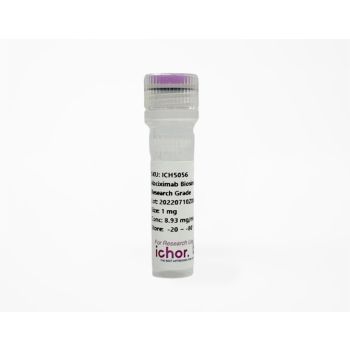
Aducanumab Biosimilar - Research Grade
$315.00 - $19,890.00
Frequently Bought Together


Loading...
Aducanumab Biosimilar - Research Grade
Endotoxin
≤ 1.0 EU/mg as determined by the LAL method
Purity
>95% by SDS-PAGE
Species Reactivity
Human
Target
Beta Amyloid
Concentration
>1mg/ml
Isotype
Human IgG1
Antibodies Against The Same Target
Gantenerumab Biosimilar - Research Grade (ICH5009), Ponezumab Biosimilar - Research Grade (ICH5111), Bapineuzumab Biosimilar - Research Grade (ICH5140), Lecanemab Biosimilar - Research Grade (ICH5219), Crenezumab Biosimilar - Research Grade (ICH5454), Donanemab Biosimilar - Research Grade (ICH5487), Remternetug Biosimilar - Research Grade (ICH5815), Sabirnetug Biosimilar - Research Grade (ICH5842), Solanezumab Biosimilar - Research Grade (ICH5871), Usilnetug Biosimilar - Research Grade (ICH5963)
Sequence
https://www.imgt.org/mAb-DB/
Buffer
ICH3002
Uniprot
P05067
Shipping Conditions
Blue ice
Background
This product is an unconjugated, non-therapeutic recombinant analog of aducanumab, supplied for research use only. It is a fully human IgG1 monoclonal antibody directed against aggregated forms of beta amyloid, the peptide derived from amyloid precursor protein (APP, UniProt P05067) that accumulates in Alzheimer's disease. It reproduces the target specificity of the originator molecule while being manufactured independently of any clinical program; it is not the licensed drug and is not intended for human or veterinary use. The format makes it a useful tool for in-vitro and preclinical work: as a well-characterized positive control or reference binder in aggregation and immunodetection assays, for studying antibody recognition of amyloid conformers, and as a benchmark in comparability, ADCC/effector, or engineering studies. It is offered at research grade with low endotoxin (<1 EU/mg; ultra-low <0.5 EU/mg options) and in bulk milligram-to-gram quantities, supporting assay development, screening, and preclinical model work where consistent lot-to-lot supply and defined specificity matter.
Beta amyloid (Abeta) is a short peptide, chiefly 40 or 42 residues long, released from the transmembrane amyloid precursor protein (APP, UniProt P05067) by sequential cleavage by beta-secretase (BACE1) and the gamma-secretase complex. Monomeric Abeta can self-associate into soluble oligomers, protofibrils, and insoluble fibrils that deposit as the extracellular plaques characteristic of Alzheimer's disease. The longer, more hydrophobic Abeta42 species is especially aggregation-prone. Soluble oligomeric and fibrillar assemblies are widely implicated in synaptic dysfunction, neuroinflammation, and neuronal injury, making conformation-specific recognition biologically important. Antibodies such as aducanumab preferentially bind aggregated Abeta (oligomers and fibrils) over monomer, a selectivity relevant to distinguishing pathological assemblies from physiological peptide and to studying the amyloid cascade in vitro and in animal models.
Other Names
Aducanumab-avwa, BIIB037, BIIB-037
Specificity
Detects human Beta Amyloid. This non-therapeutic antibody uses the same sequence as the therapeutic antibody Aducanumab.
Purification Method
This monoclonal antibody was purified using multi-step affinity chromatography methods such as Protein A or G depending on the species and isotype.
Formulation
Sterile, preservative-free, solution in PBS. BSA and Azide free.
Storage
This biosimilar is stable when stored at 2-8°C. For longer term storage (> 3 months) it is recommended to store this antibody at -20°C or -70°C.
Applications
Functional Assays
Application Notes
This biosimilar is for research use only (RUO): it is not for diagnostic or therapeutic procedures and cannot be purchased by patients.
Use
Products are for research use only. Not for use in diagnostic or therapeutic procedures.
Faq (q&a)
Q: Is the Aducanumab biosimilar available in gram quantities?
A: Yes — it is supplied in scalable milligram to gram quantities for heavy-usage and high-throughput laboratories.
Q: Is this research-grade Aducanumab suitable for in vivo studies?
A: Yes, it is a low-endotoxin, in vivo-ready formulation intended for preclinical and in vivo research use only (RUO).
Q: What does the Aducanumab biosimilar target?
A: It is an unconjugated, non-therapeutic analog of Aducanumab that binds human Beta Amyloid.
Write Your Own Review
Is the Aducanumab biosimilar available in gram quantities?
Yes — it is supplied in scalable milligram to gram quantities for heavy-usage and high-throughput laboratories.
Is this research-grade Aducanumab suitable for in vivo studies?
Yes, it is a low-endotoxin, in vivo-ready formulation intended for preclinical and in vivo research use only (RUO).
What does the Aducanumab biosimilar target?
It is an unconjugated, non-therapeutic analog of Aducanumab that binds human Beta Amyloid.
Who Viewed This Also Viewed


Add recommended extras
-
 In Vivo Buffer pH7.2$112.50
 -
 Bulk Human IgG1 (IB1) Isotype Control$510.00 - $3,930.00
