


Back to Top
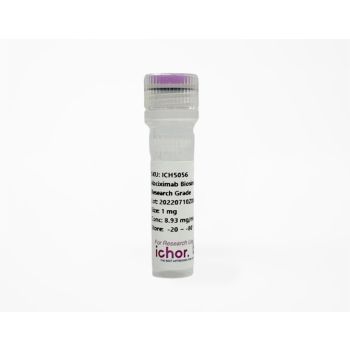
Polatuzumab Biosimilar - Research Grade
$315.00 - $19,890.00
Frequently Bought Together


Loading...
Polatuzumab Biosimilar - Research Grade
Endotoxin
≤ 1.0 EU/mg as determined by the LAL method
Purity
>95% by SDS-PAGE
Species Reactivity
Human
Target
CD79b
Concentration
>1mg/ml
Isotype
Human IgG1
Antibodies Against The Same Target
Sequence
https://www.imgt.org/mAb-DB/
Buffer
ICH3002
Uniprot
P40259
Shipping Conditions
Blue ice
Background
This product is an unconjugated, non-therapeutic recombinant analog of polatuzumab, a human/humanized IgG1 antibody directed against CD79b, supplied strictly for research use only. It reproduces the antigen-binding specificity of the originator molecule so that laboratories can study CD79b engagement without the cytotoxic payload found in the clinical antibody-drug conjugate. Because it is delivered as naked IgG1, it serves as a matched binding reference, an isotype-consistent control, and a starting point for conjugation chemistry and payload-linker optimization in ADC development workflows. It is manufactured to research-grade specifications with low endotoxin (typically <1 EU/mg, with ultra-low <0.5 EU/mg options) and is available in bulk milligram-to-gram quantities suitable for assay standardization, batch bridging, and preclinical model work. It is not the clinical drug, contains no cytotoxic conjugate, and is not intended for human or veterinary use. Typical applications include flow cytometry, binding and neutralization assays, epitope and competition studies, and in-vitro characterization of CD79b-expressing B-cell lines.
CD79b (also called Ig-beta, B29; UniProt P40259) is a transmembrane signaling subunit of the B-cell antigen receptor (BCR) complex. Together with its partner CD79a (Ig-alpha), it forms a disulfide-linked heterodimer that associates non-covalently with membrane immunoglobulin, enabling surface expression of the BCR and transducing antigen-recognition signals into the cell. Its cytoplasmic tail carries an immunoreceptor tyrosine-based activation motif (ITAM); upon BCR engagement, ITAM tyrosines are phosphorylated by Src-family kinases and recruit SYK, initiating downstream signaling that governs B-cell development, activation, and survival. CD79b expression is largely restricted to the B-cell lineage and is retained on most B-cell non-Hodgkin lymphomas, which underlies its value as a lineage-specific target and as an antibody-drug-conjugate target for internalizing payload delivery.
Other Names
B-cell-specific glycoprotein B29, Ig-beta, Immunoglobulin-associated B29 protein, B-cell antigen receptor complex-associated protein beta chain, B29, IGB
Specificity
Detects human CD79b. This non-therapeutic antibody uses the same sequence as the therapeutic antibody Polatuzumab
Purification Method
This monoclonal antibody was purified using multi-step affinity chromatography methods such as Protein A or G depending on the species and isotype.
Formulation
Sterile, preservative-free, solution in PBS. BSA and Azide free.
Storage
This biosimilar is stable when stored at 2-8°C. For longer term storage (> 3 months) it is recommended to store this antibody at -20°C or -70°C.
Applications
Functional Assays
Application Notes
This biosimilar is for research use only (RUO): it is not for diagnostic or therapeutic procedures and cannot be purchased by patients.
Use
Products are for research use only. Not for use in diagnostic or therapeutic procedures.
Faq (q&a)
Q: Is the Polatuzumab biosimilar available in gram quantities?
A: Yes — it is supplied in scalable milligram to gram quantities for heavy-usage and high-throughput laboratories.
Q: Is this research-grade Polatuzumab suitable for in vivo studies?
A: Yes, it is a low-endotoxin, in vivo-ready formulation intended for preclinical and in vivo research use only (RUO).
Q: What does the Polatuzumab biosimilar target?
A: It is an unconjugated, non-therapeutic analog of Polatuzumab that binds human CD79b.
Write Your Own Review
Is the Polatuzumab biosimilar available in gram quantities?
Yes — it is supplied in scalable milligram to gram quantities for heavy-usage and high-throughput laboratories.
Is this research-grade Polatuzumab suitable for in vivo studies?
Yes, it is a low-endotoxin, in vivo-ready formulation intended for preclinical and in vivo research use only (RUO).
What does the Polatuzumab biosimilar target?
It is an unconjugated, non-therapeutic analog of Polatuzumab that binds human CD79b.
Who Viewed This Also Viewed


Anti-Rat CD71 (OX-26) In Vivo Antibody - Low Endotoxin
$400.00 - $3,780.00


Anti-Mouse CD32/CD16 (2.4G2) In Vivo Antibody - Low Endotoxin
$150.00 - $23,460.00
Add recommended extras
-
 In Vivo Buffer pH7.2$112.50
 -
 Bulk Human IgG1 (IB1) Isotype Control$510.00 - $3,930.00
