



Back to Top
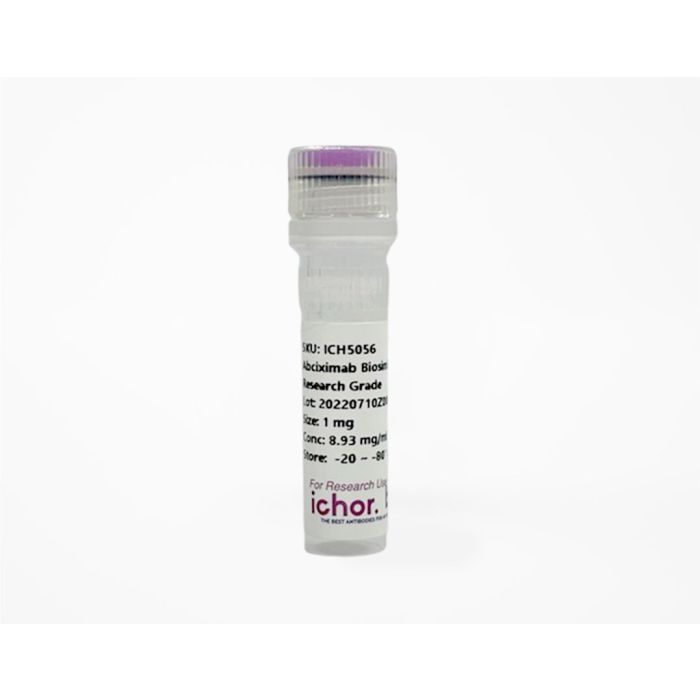
Anselamimab Biosimilar - Research Grade
Frequently Bought Together
Loading...
Anselamimab Biosimilar - Research Grade
Endotoxin
≤ 1.0 EU/mg as determined by the LAL method
Purity
>90% by SDS-PAGE
Species Reactivity
Human
Target
SAA1
Concentration
>1mg/ml
Isotype
IgG1 - kappa
Host
CHO Cells
Antibodies Against The Same Target
Sequence
https://www.imgt.org/mAb-DB/
Buffer
ICH3002
Uniprot
P0DJI8
Gene Id
6288
Shipping Conditions
Blue ice
Background
Anselamimab Biosimilar (Research Grade, ICH5348) is an unconjugated, non-therapeutic research analog of the originator antibody anselamimab, supplied for research use only. Anselamimab (also known as CAEL-101) is a chimeric IgG1-kappa monoclonal antibody derived from the murine antibody 11-1F4. Its recognized mechanism is binding to a conformational cross-beta epitope on misfolded immunoglobulin light-chain amyloid fibrils (both kappa and lambda subtypes), promoting antibody-mediated phagocytic clearance of amyloid deposits; it was investigated clinically for systemic immunoglobulin light-chain (AL) amyloidosis. Note: the originator antibody's published target is misfolded light-chain amyloid, whereas this product card lists the target as SAA1 (Serum Amyloid A-1, UniProt P0DJI8), the acute-phase precursor of AA (secondary) amyloidosis. These are distinct amyloid systems, so the card's target assignment appears inconsistent with the drug's documented biology and should be verified before publication. This research-grade biosimilar is offered as a low-endotoxin, bulk-scalable analog suitable for functional and in-vitro characterization work. It is not a clinical drug and is not intended for therapeutic or diagnostic use in humans.
The originator antibody anselamimab recognizes a non-native, conformational cross-beta structure presented by misfolded immunoglobulin light chains in amyloid fibrils, independent of kappa or lambda subtype. This fibril-directed epitope is absent from soluble, correctly folded light chains, giving the antibody selectivity for pathological amyloid deposits and enabling macrophage-mediated fibril clearance. By contrast, the target named on this card, SAA1 (Serum Amyloid A-1, UniProt P0DJI8), is a small acute-phase apolipoprotein produced by the liver and strongly induced by inflammatory cytokines; its proteolytic fragments aggregate into fibrils in AA (secondary) amyloidosis, a separate disease from AL amyloidosis. Because the listed SAA1 target does not match the light-chain amyloid biology attributed to anselamimab, the intended antigen for this lot should be confirmed. Users planning binding or specificity studies should validate reactivity against the relevant amyloid species empirically.
Other Names
SAA, Serum amyloid A-1 protein
Purification Method
This monoclonal antibody was purified using Protein A
Formulation
Sterile, preservative-free, solution in PBS. BSA and Azide free.
Storage
This biosimilar is stable when stored at 2-8°C. For longer term storage (> 3 months) it is recommended to store this antibody at -20°C or -70°C.
Applications
Functional Assays
Application Notes
This biosimilar is for research use only (RUO): it is not for diagnostic or therapeutic procedures and cannot be purchased by patients.
Use
Products are for research use only. Not for use in diagnostic or therapeutic procedures.
Delivery Time
3-4 weeks
Suggested H1
Anselamimab (anti-SAA1) Biosimilar
Faq (q&a)
Q: Is the Anselamimab biosimilar available in gram quantities?
A: Yes — it is supplied in scalable milligram to gram quantities for heavy-usage and high-throughput laboratories.
Q: Is this research-grade Anselamimab biosimilar suitable for in vivo studies?
A: Yes, it is a low-endotoxin, in vivo-ready formulation intended for preclinical and in vivo research use only (RUO).
Q: What does the Anselamimab biosimilar target?
A: It is an unconjugated, non-therapeutic analog of Anselamimab that binds SAA1.
Write Your Own Review
Is the Anselamimab biosimilar available in gram quantities?
Yes — it is supplied in scalable milligram to gram quantities for heavy-usage and high-throughput laboratories.
Is this research-grade Anselamimab biosimilar suitable for in vivo studies?
Yes, it is a low-endotoxin, in vivo-ready formulation intended for preclinical and in vivo research use only (RUO).
What does the Anselamimab biosimilar target?
It is an unconjugated, non-therapeutic analog of Anselamimab that binds SAA1.
Who Viewed This Also Viewed
Add recommended extras
-
 In Vivo Buffer pH7.2$112.50
