


Back to Top
Tilavonemab Biosimilar - Research Grade
$315.00 - $19,890.00
Frequently Bought Together

![Image of ichorbio's Nemolizumab Biosimilar - Research Grade [ICH5123]](https://ichor.bio/media/catalog/product/cache/7dc979ec4521a70fc3496447fd76f185/i/c/ich5123_nemolizumab_biosimilar_-_research_grade.webp)
![Image of ichorbio's Tilvestamab Biosimilar - Research Grade [ICH5122]](https://ichor.bio/media/catalog/product/cache/7dc979ec4521a70fc3496447fd76f185/i/c/ich5122_tilvestamab_biosimilar_-_research_grade.webp)


Loading...
Tilavonemab Biosimilar - Research Grade
Endotoxin
<1EU/mg Determined by LAL gel clotting assay
Purity
≥95% monomer by analytical SEC, >95% by SDS Page
Species Reactivity
Human
Target
Tau
Concentration
>1mg/ml
Isotype
Human IgG4 S228P Kappa
Antibodies Against The Same Target
Sequence
https://www.imgt.org/mAb-DB/
Buffer
ICH3002
Uniprot
P10636
Shipping Conditions
Blue ice
Background
This product is an unconjugated, non-therapeutic recombinant analog of tilavonemab (ABBV-8E12), an investigational anti-tau monoclonal antibody. Built around the tau target as a human IgG4 (S228P stabilized) kappa molecule, it is intended strictly for research use only and is not the clinical drug, nor is it for human or veterinary use. The analog reproduces the antigen-binding specificity of the originator against microtubule-associated protein tau (MAPT), making it useful as a reference reagent in tau-focused research. Typical applications include use as an isotype-matched binding standard, a positive control in immunoassays profiling anti-tau antibodies, a tool for benchmarking tau capture/detection reagents, and a starting point for ADC or engineering workflows. It is supplied at low endotoxin levels (research grade <1 EU/mg; ultra-low <0.5 EU/mg) and available in bulk milligram-to-gram quantities to support in-vitro assay development, preclinical characterization, and comparability studies. The S228P hinge substitution reduces IgG4 Fab-arm exchange, giving a stable, well-defined reagent for reproducible experiments.
Tau, encoded by MAPT (UniProt P10636), is a microtubule-associated protein highly enriched in neuronal axons. It promotes the assembly and stabilization of tubulin into microtubules and links microtubules to other cytoskeletal and membrane components, supporting axonal transport and neuronal polarity. Six major isoforms arise in the adult human CNS from alternative splicing, differing in the number of N-terminal inserts and microtubule-binding repeats (3R vs 4R). Tau activity is regulated by phosphorylation; abnormal hyperphosphorylation reduces microtubule binding and promotes aggregation into paired helical filaments and neurofibrillary tangles. These aggregates, and the trans-cellular spread of misfolded tau species, are central features of tauopathies including Alzheimer disease and progressive supranuclear palsy, which motivates anti-tau antibody research.
Other Names
MAPT
Specificity
Detects human MAPT
Purification Method
This monoclonal antibody was purified using multi-step affinity chromatography methods such as Protein A or G depending on the species and isotype.
Fc Modification
S228P
Formulation
Sterile, preservative-free, solution in PBS. BSA and Azide free.
Storage
This biosimilar is stable when stored at 2-8°C. For longer term storage (> 3 months) it is recommended to store this antibody at -20°C or -70°C.
Applications
Functional Assays
Application Notes
This biosimilar is for research use only (RUO): it is not for diagnostic or therapeutic procedures and cannot be purchased by patients.
Use
Products are for research use only. Not for use in diagnostic or therapeutic procedures.
Faq (q&a)
Q: Is the Tilavonemab biosimilar available in gram quantities?
A: Yes — it is supplied in scalable milligram to gram quantities for heavy-usage and high-throughput laboratories.
Q: Is this research-grade Tilavonemab biosimilar suitable for in vivo studies?
A: Yes, it is a low-endotoxin, in vivo-ready formulation intended for preclinical and in vivo research use only (RUO).
Q: What does the Tilavonemab biosimilar target?
A: It is an unconjugated, non-therapeutic analog of Tilavonemab that binds human Tau.
Write Your Own Review
Is the Tilavonemab biosimilar available in gram quantities?
Yes — it is supplied in scalable milligram to gram quantities for heavy-usage and high-throughput laboratories.
Is this research-grade Tilavonemab biosimilar suitable for in vivo studies?
Yes, it is a low-endotoxin, in vivo-ready formulation intended for preclinical and in vivo research use only (RUO).
What does the Tilavonemab biosimilar target?
It is an unconjugated, non-therapeutic analog of Tilavonemab that binds human Tau.
Who Viewed This Also Viewed
Add recommended extras
-
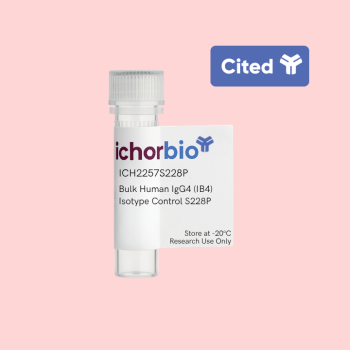 Bulk Human IgG4 (IB4) Isotype Control S228P$750.00 - $6,503.00
 -
 In Vivo Buffer pH7.2$112.50
