



Back to Top
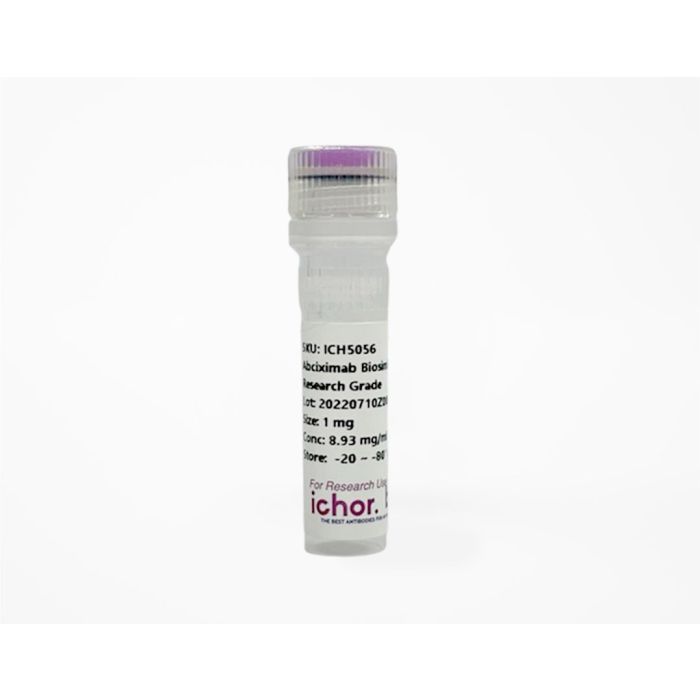
Bezetabart Biosimilar - Research Grade
Frequently Bought Together
Loading...
Bezetabart Biosimilar - Research Grade
Endotoxin
≤ 1.0 EU/mg as determined by the LAL method
Purity
>90% by SDS-PAGE
Species Reactivity
Human
Target
CD74
Concentration
>1mg/ml
Isotype
IgG1 - kappa
Host
CHO Cells
Antibodies Against The Same Target
Sequence
https://www.imgt.org/mAb-DB/
Buffer
ICH3002
Uniprot
P04233
Shipping Conditions
Blue ice
Background
This product is a research-grade biosimilar of bezetabart, supplied as an unconjugated, non-therapeutic analog of the originator antibody for research use only. Bezetabart is a fully human anti-CD74 antibody that in its clinical form (bezetabart debotansine, originally STRO-001) is delivered as a site-specific antibody-drug conjugate carrying a maytansinoid payload; this biosimilar reproduces the antibody component built around the CD74 target without any conjugated warhead, and it is not a clinical drug. It is a human IgG1 kappa molecule and is intended for functional and in-vitro applications such as antigen binding, epitope and specificity studies, internalisation assays, and use as a reference or control antibody. As a research-grade material it is produced to low-endotoxin specifications (<1 EU/mg) and is available in bulk milligram to gram quantities to support assay standardisation and larger studies. Because the molecule is directed against a human target and is provided unconjugated, it is positioned for characterisation and neutralisation-type experiments rather than as a therapeutic. All framing here is for ichorbio to review against internal specifications.
CD74 (UniProt P04233), also called the MHC class II invariant chain (Ii) or Ii/p33, is a type II transmembrane glycoprotein that acts as a chaperone for MHC class II molecules. It promotes correct folding and assembly of class II alpha/beta dimers in the endoplasmic reticulum and directs them to the endosomal pathway, where its CLIP segment occupies the peptide-binding groove until antigenic peptide loading. Beyond antigen presentation, cell-surface CD74 serves as a receptor for macrophage migration inhibitory factor (MIF), triggering signalling that influences cell survival and proliferation. CD74 expression is largely restricted to HLA class II-positive cells such as B cells, monocytes, dendritic cells and macrophages in normal tissue, but is frequently overexpressed in B-cell malignancies including non-Hodgkin lymphoma and multiple myeloma. Rapid internalisation upon antibody binding makes it an attractive target for antibody-based and antibody-drug-conjugate approaches.
Other Names
HLA-DR antigens-associated invariant chain, Ia antigen-associated invariant chain, Ii, HLA class II histocompatibility antigen gamma chain, DHLAG
Purification Method
This monoclonal antibody was purified using Protein A
Formulation
Sterile, preservative-free, solution in PBS. BSA and Azide free.
Storage
This biosimilar is stable when stored at 2-8°C. For longer term storage (> 3 months) it is recommended to store this antibody at -20°C or -70°C.
Applications
Functional Assays
Application Notes
This biosimilar is for research use only (RUO): it is not for diagnostic or therapeutic procedures and cannot be purchased by patients.
Use
Products are for research use only. Not for use in diagnostic or therapeutic procedures.
Delivery Time
3-4 weeks
Faq (q&a)
Q: Is the Bezetabart biosimilar available in gram quantities?
A: Yes — it is manufactured in scalable milligram to gram quantities to support bulk and high-throughput preclinical experiments.
Q: Is this research-grade Bezetabart biosimilar suitable for in vivo studies?
A: Yes, it is supplied in a low-endotoxin, in vivo-ready formulation intended for preclinical and in vivo research use only (RUO).
Q: What does the Bezetabart biosimilar target?
A: It is an unconjugated, non-therapeutic research analog of Bezetabart that binds CD74; for research use only.
Write Your Own Review
Is the Bezetabart biosimilar available in gram quantities?
Yes — it is manufactured in scalable milligram to gram quantities to support bulk and high-throughput preclinical experiments.
Is this research-grade Bezetabart biosimilar suitable for in vivo studies?
Yes, it is supplied in a low-endotoxin, in vivo-ready formulation intended for preclinical and in vivo research use only (RUO).
What does the Bezetabart biosimilar target?
It is an unconjugated, non-therapeutic research analog of Bezetabart that binds CD74; for research use only.
Who Viewed This Also Viewed


Add recommended extras
-
 In Vivo Buffer pH7.2$112.50
