



Back to Top
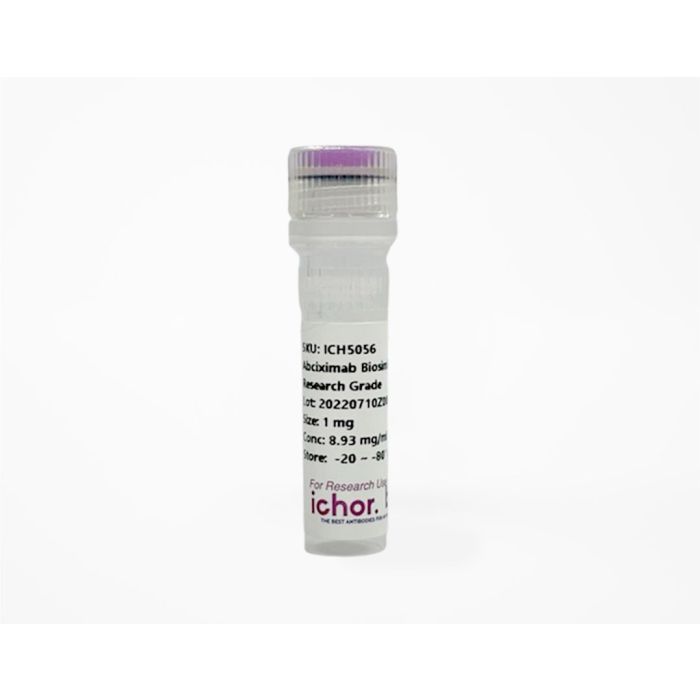
Avizakimab Biosimilar - Research Grade
Frequently Bought Together

Loading...
Avizakimab Biosimilar - Research Grade
Endotoxin
≤ 1.0 EU/mg as determined by the LAL method
Purity
>90% by SDS-PAGE
Species Reactivity
Human
Target
IL21
Concentration
>1mg/ml
Isotype
IgG1 - kappa
Host
CHO Cells
Sequence
https://www.imgt.org/mAb-DB/
Buffer
ICH3002
Uniprot
Q9HBE4
Shipping Conditions
Blue ice
Background
This product is a research-grade biosimilar of avizakimab, supplied as an unconjugated, non-therapeutic analog of the originator antibody for research use only. It reproduces the antigen-binding specificity of the reference molecule, an IgG1-kappa directed against human interleukin-21 (IL-21), and is intended as a functional tool rather than a clinical drug. Because it is built around the IL-21 target, it is well suited to in-vitro characterization of IL-21 biology, including ligand-neutralization assays, receptor-blocking studies, competitive binding experiments, and use as a positive or reference control alongside other anti-IL-21 reagents. The material is manufactured to research-grade endotoxin specifications (typically under 1 EU/mg) and is available in bulk milligram-to-gram quantities, making it appropriate for assay development, screening cascades, and comparability work where consistent lot-to-lot performance matters. As a biosimilar analog it carries no assigned hybridoma clone designation; its identity is defined by the originator sequence and its IL-21 binding activity. It is not formulated or validated for therapeutic administration in humans.
Interleukin-21 (IL-21) is a type I four-helix-bundle cytokine of the common gamma-chain family, produced chiefly by activated CD4+ T cells, including follicular helper T (Tfh) cells, and by natural killer T cells. It signals through the IL-21 receptor paired with the common gamma chain, driving JAK1/JAK3 and predominantly STAT3 activation. IL-21 is a central regulator of adaptive immunity: it promotes B-cell differentiation into plasma cells, supports germinal-center reactions and antibody class switching, sustains Tfh responses, and modulates CD8+ T-cell and NK-cell effector function. Dysregulated IL-21 signaling is implicated in autoimmune and inflammatory conditions such as lupus, type 1 diabetes, rheumatoid arthritis, and Sjogren syndrome, which is why neutralizing IL-21 is of therapeutic and research interest. Because IL-21 is human-restricted in this context, analogs targeting it are typically studied in human cell systems rather than in conventional mouse in-vivo models.
Other Names
Za11, Interleukin-21
Purification Method
This monoclonal antibody was purified using Protein A
Formulation
Sterile, preservative-free, solution in PBS. BSA and Azide free.
Storage
This biosimilar is stable when stored at 2-8°C. For longer term storage (> 3 months) it is recommended to store this antibody at -20°C or -70°C.
Applications
Functional Assays
Application Notes
This biosimilar is for research use only (RUO): it is not for diagnostic or therapeutic procedures and cannot be purchased by patients.
Use
Products are for research use only. Not for use in diagnostic or therapeutic procedures.
Delivery Time
3-4 weeks
Faq (q&a)
Q: Is the Avizakimab biosimilar available in gram quantities?
A: Yes — it is supplied in scalable milligram to gram quantities for heavy-usage and high-throughput laboratories.
Q: Is this research-grade Avizakimab biosimilar suitable for in vivo studies?
A: Yes, it is a low-endotoxin, in vivo-ready formulation intended for preclinical and in vivo research use only (RUO).
Q: What does the Avizakimab biosimilar target?
A: It is an unconjugated, non-therapeutic analog of Avizakimab that binds IL21.
Write Your Own Review
Is the Avizakimab biosimilar available in gram quantities?
Yes — it is supplied in scalable milligram to gram quantities for heavy-usage and high-throughput laboratories.
Is this research-grade Avizakimab biosimilar suitable for in vivo studies?
Yes, it is a low-endotoxin, in vivo-ready formulation intended for preclinical and in vivo research use only (RUO).
What does the Avizakimab biosimilar target?
It is an unconjugated, non-therapeutic analog of Avizakimab that binds IL21.
Who Viewed This Also Viewed


Human IgG4 Isotype Control S228P/D265A/L309V/R409K
$315.00 - $5,200.00

Anti-Mouse PD-L2 (TY25) In Vivo Antibody - Low Endotoxin
$400.00 - $3,780.00

Anti-Mouse CD276 (MJ18) In Vivo Antibody - Low Endotoxin
$400.00 - $3,780.00


Add recommended extras
-
 In Vivo Buffer pH7.2$112.50
