


Back to Top
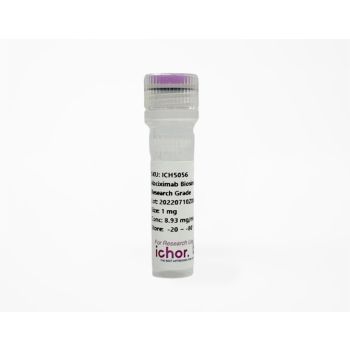
Codrituzumab Biosimilar - Research Grade
$315.00 - $19,890.00
Frequently Bought Together


Loading...
Codrituzumab Biosimilar - Research Grade
Endotoxin
≤ 1.0 EU/mg as determined by the LAL method
Purity
>95% by SDS-PAGE
Species Reactivity
Human
Target
GPC3
Concentration
>1mg/ml
Isotype
Human IgG1
Sequence
https://www.imgt.org/mAb-DB/
Buffer
ICH3002
Uniprot
P51654
Shipping Conditions
Blue ice
Background
This product is an unconjugated, non-therapeutic recombinant analog of codrituzumab, a humanized IgG1 monoclonal antibody directed against Glypican-3 (GPC3). It is supplied strictly for research use only and is not the clinical drug; it is not intended for human or veterinary use. Built as a human IgG1 targeting human GPC3, the reagent reproduces the antigen-binding specificity of the originator, making it useful as a defined tool for interrogating GPC3 biology in vitro. Typical research applications include serving as a benchmark or reference binder in assays comparing anti-GPC3 candidates, as a positive control in binding and neutralization work, and as a scaffold for ADCC-focused or antibody-drug-conjugate development studies. The material is offered at research grade with low endotoxin (<1 EU/mg; ultra-low <0.5 EU/mg options) and is available in bulk milligram-to-gram quantities to support assay standardization, preclinical model work, and lot-to-lot comparability. Because it carries a native, unconjugated human IgG1 Fc, it also supports Fc-effector-function studies alongside its antigen-recognition role.
Glypican-3 (GPC3) is a member of the glypican family of heparan sulfate proteoglycans, attached to the outer cell membrane via a glycosylphosphatidylinositol (GPI) anchor. The core protein is cleaved by furin into two subunits held together by a disulfide bond, and it bears heparan sulfate chains near its C-terminus. GPC3 modulates several developmental signaling pathways, including Wnt, Hedgehog, FGF and BMP, thereby influencing cell growth and morphogenesis during embryogenesis. Loss-of-function mutations cause Simpson-Golabi-Behmel overgrowth syndrome. In adults GPC3 is largely silenced in most normal tissues but is markedly re-expressed in hepatocellular carcinoma and certain other tumors, which underpins its interest as a tumor-associated antigen and diagnostic marker. This restricted, oncofetal expression pattern makes GPC3 an attractive target for antibody-based research.
Other Names
GTR2-2, Intestinal protein OCI-5, MXR7, Glypican-3, OCI5
Specificity
Detects human GPC3. This non-therapeutic antibody uses the same sequence as the therapeutic antibody Codrituzumab.
Purification Method
This monoclonal antibody was purified using multi-step affinity chromatography methods such as Protein A or G depending on the species and isotype.
Formulation
Sterile, preservative-free, solution in PBS. BSA and Azide free.
Storage
This biosimilar is stable when stored at 2-8°C. For longer term storage (> 3 months) it is recommended to store this antibody at -20°C or -70°C.
Applications
Functional Assays
Application Notes
This biosimilar is for research use only (RUO): it is not for diagnostic or therapeutic procedures and cannot be purchased by patients.
Use
Products are for research use only. Not for use in diagnostic or therapeutic procedures.
Faq (q&a)
Q: Is the Codrituzumab biosimilar available in gram quantities?
A: Yes — it is supplied in scalable milligram to gram quantities for heavy-usage and high-throughput laboratories.
Q: Is this research-grade Codrituzumab suitable for in vivo studies?
A: Yes, it is a low-endotoxin, in vivo-ready formulation intended for preclinical and in vivo research use only (RUO).
Q: What does the Codrituzumab biosimilar target?
A: It is an unconjugated, non-therapeutic analog of Codrituzumab that binds human GPC3.
Write Your Own Review
Is the Codrituzumab biosimilar available in gram quantities?
Yes — it is supplied in scalable milligram to gram quantities for heavy-usage and high-throughput laboratories.
Is this research-grade Codrituzumab suitable for in vivo studies?
Yes, it is a low-endotoxin, in vivo-ready formulation intended for preclinical and in vivo research use only (RUO).
What does the Codrituzumab biosimilar target?
It is an unconjugated, non-therapeutic analog of Codrituzumab that binds human GPC3.
Who Viewed This Also Viewed

Anti-Mouse CD18 (M18/2) In Vivo Antibody - Low Endotoxin
$150.00 - $2,945.00

Anti-Mouse CD90 (T24/31) In Vivo Antibody - Low Endotoxin
$400.00 - $3,780.00

Anti-Mouse CD209b (22D1) In Vivo Antibody - Low Endotoxin
$400.00 - $3,780.00


Anti-Mouse TIGIT (1G9) In Vivo Antibody - Low Endotoxin
$400.00 - $2,945.00

Add recommended extras
-
 In Vivo Buffer pH7.2$112.50
 -
 Bulk Human IgG1 (IB1) Isotype Control$510.00 - $3,930.00
